Montessori does not stop at the classroom door. Many of its most powerful ideas translate directly to family life, and the best news is that they require no special training and very little special equipment. Bringing Montessori home is less about buying wooden toys and more about a few shifts in how you set up your space and how you respond to your child.
Prepare the environment
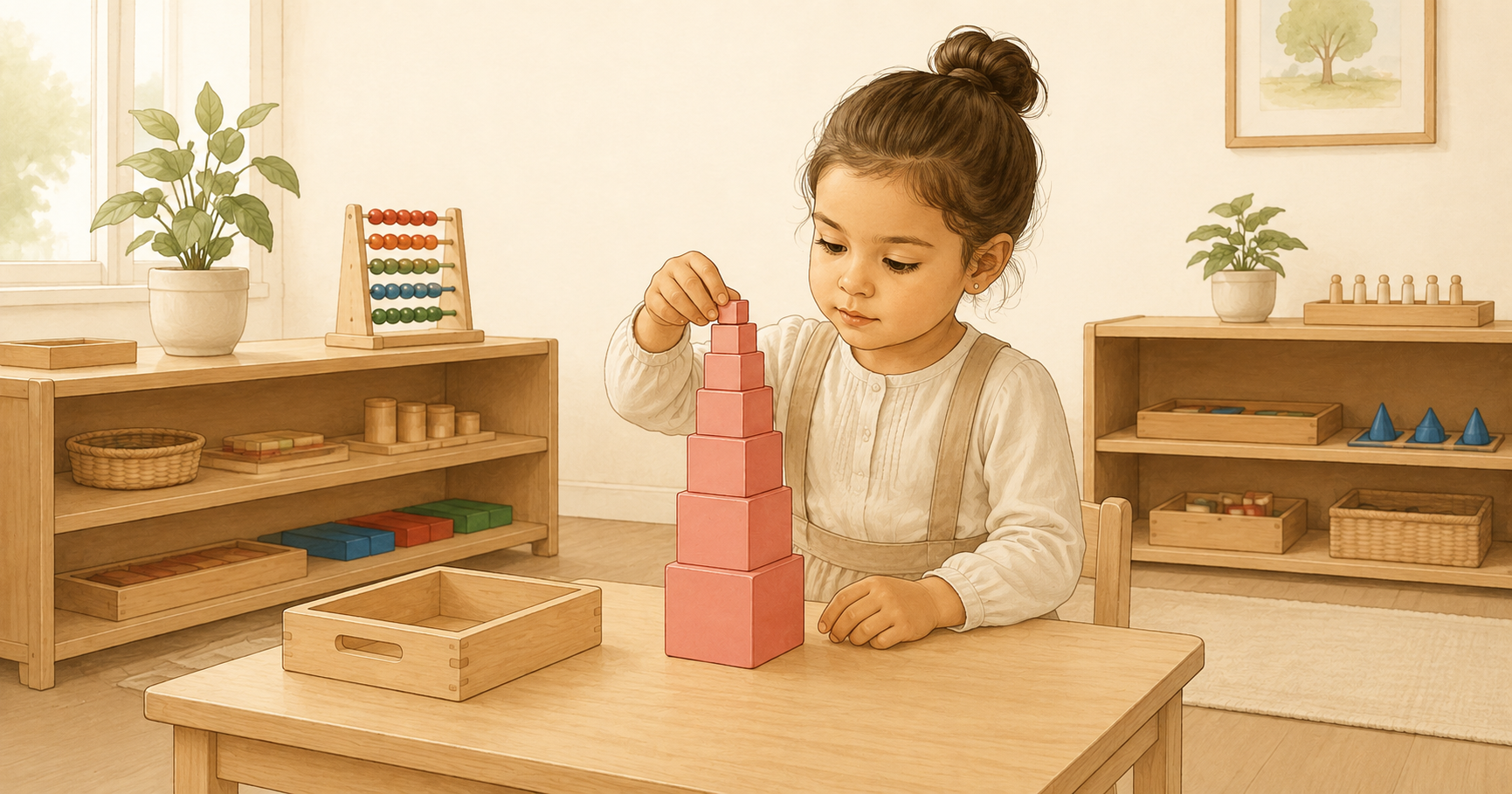
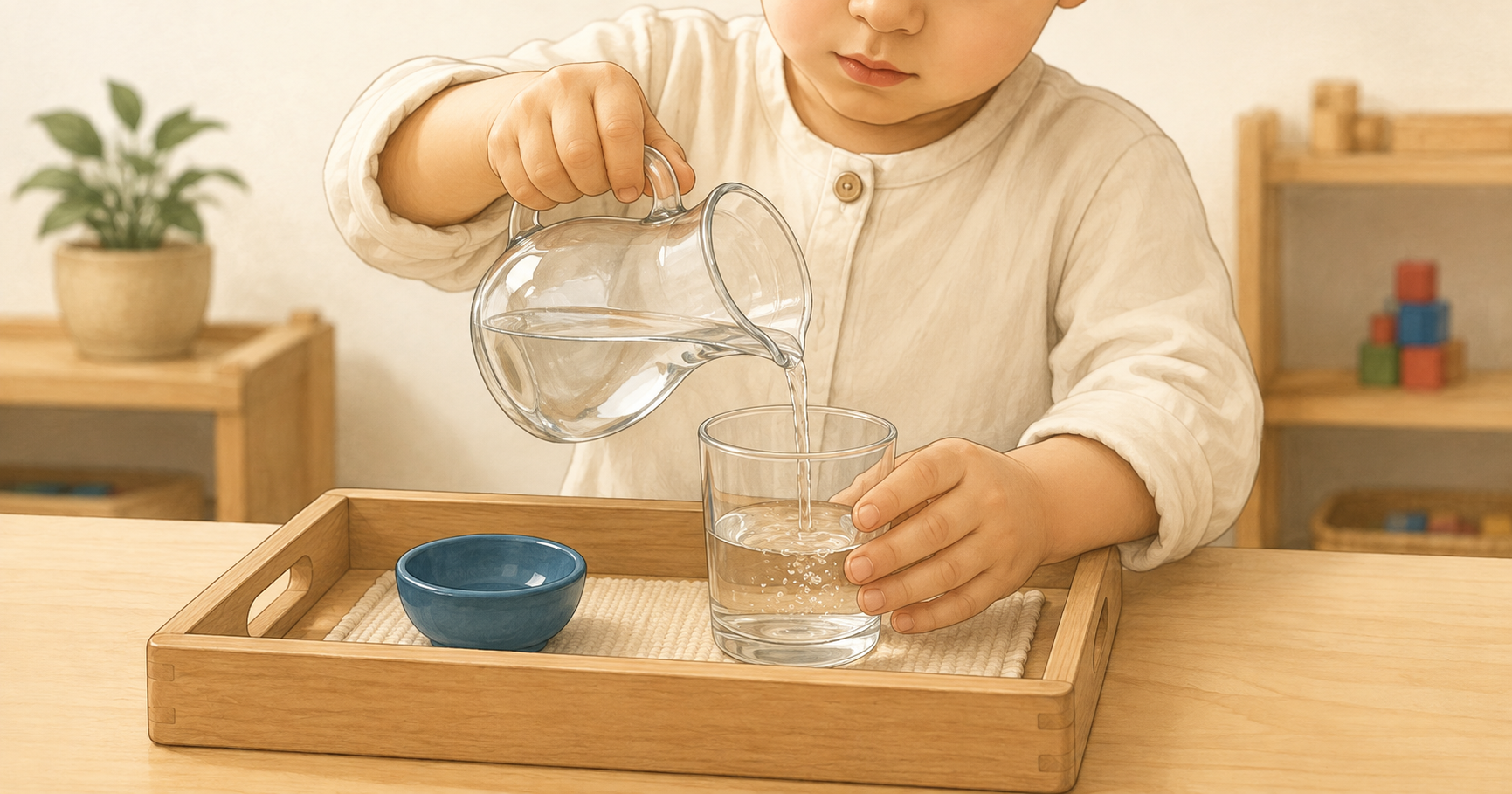
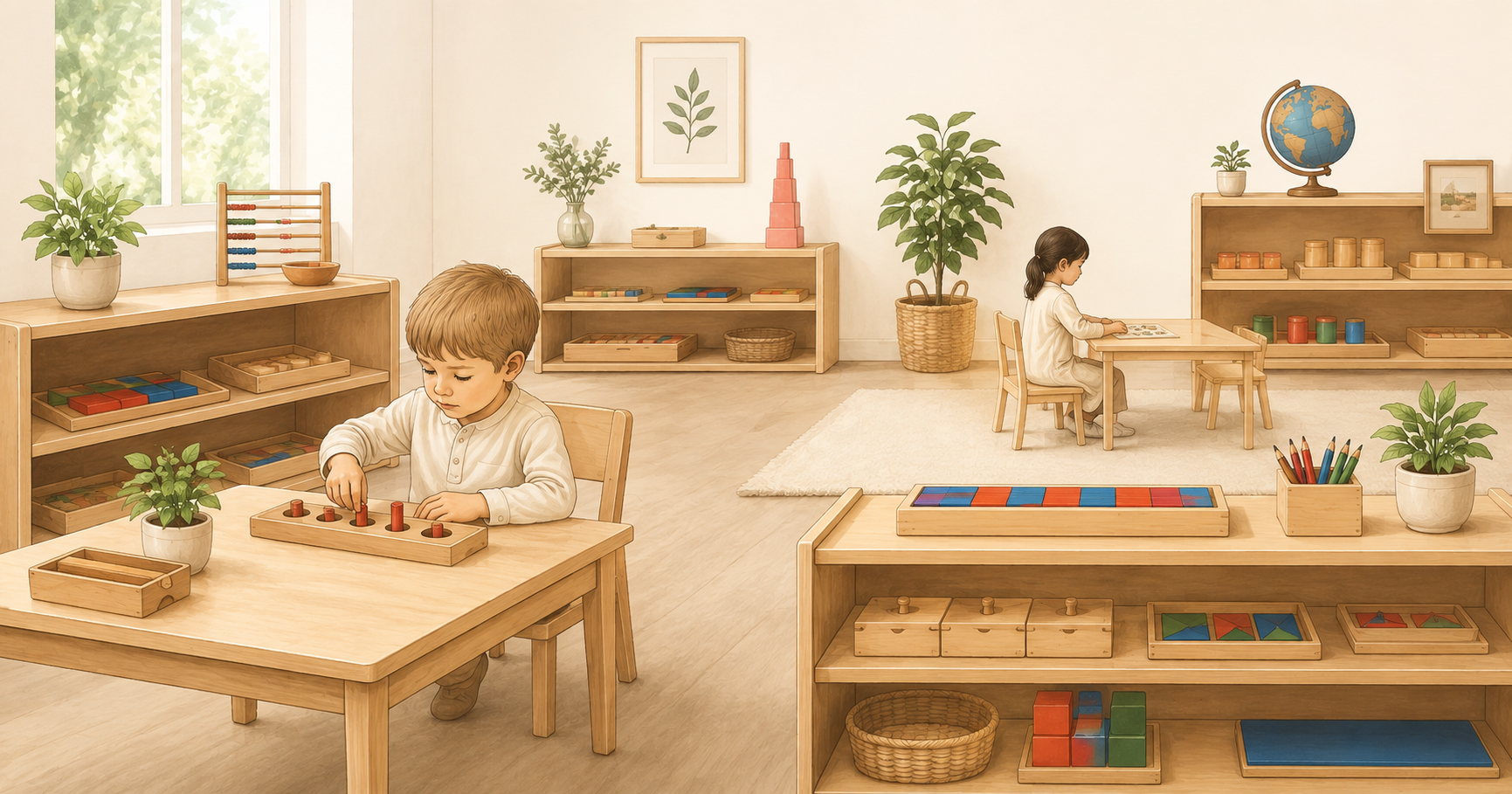
The single most useful Montessori idea for home is the prepared environment: arranging your space so your child can succeed without constant help. A low hook for their coat, a small pitcher they can actually lift, a step stool at the bathroom sink, a shelf with a few well-chosen activities rather than a bin overflowing with a hundred toys. When the environment fits the child, daily routines get calmer almost immediately, because the child can do more for themselves and needs to be rescued less often. You do not need to remodel; you need to look at your home from your child's height and remove the small obstacles between them and independence.
Let them do real work
Young children are far more capable than we tend to assume, and they are drawn to real, purposeful work far more than to plastic imitations of it. Washing a table, cracking eggs, folding napkins, watering plants, sorting laundry, and helping to prepare a snack are exactly the kinds of activities children love, precisely because they are real and useful. Yes, it is slower at first, and yes, it is messier. But the child who is allowed to genuinely help builds coordination, concentration, and a durable sense of belonging and contribution. The goal is not a perfectly folded towel; it is a child who sees themselves as a capable member of the family.
Protect concentration and offer real choices
When your child is deeply absorbed in something, resist the urge to interrupt, correct, or praise; that quiet focus is concentration being built, and it is precious. Offer choices within limits ("would you like the red cup or the blue cup?" rather than an open-ended "what do you want?"), which gives children a real sense of agency without overwhelming them. And slow down. Much of what looks like defiance in a toddler is simply a child who needs a little more time to do something themselves. A few extra minutes on the front end saves a great deal of friction.
The articles in this section offer simple, doable ideas for bringing these principles into everyday family life. Families at Little Scholars in Orange often ask how to keep the consistency going between school and home, and this is a good place to start; small, steady changes add up quickly.