“The child's development follows a path of successive stages of independence, and our knowledge of this must guide us in our behaviour towards him. We have to help the child to act, will and think for himself. This is the art of serving the spirit, an art which can be practised to perfection only when working among children.”
— Dr. Maria Montessori
It’s no secret that we consistently advocate for childhood independence here at Little Scholars Academy of California. Independence is the cornerstone of authentic Montessori education and one of the most vital keys to nurturing a confident, capable, and self-directed child.
As parents, it comes as no surprise that independence looks vastly different at every developmental stage. When we meet children where they are and offer tailored opportunities to act for themselves, it is truly extraordinary to witness what they can accomplish.
As a school honored as the Best Montessori School in Orange County for four consecutive years, we love partnering with families to extend the Montessori ethos into the home. Here is how independence unfolds across each stage of growth—and simple, practical ways you can foster it in your everyday routines.
Infants (Six Weeks to Walking): Freedom of Movement & Choice
Our littlest scholars grow at a breathtaking pace. Before long, infants progress from soft stretches to rolling, scooting, sitting, crawling, standing, and taking those triumphant first steps.
Figuring out how to move independently is one of your baby’s primary developmental tasks. They are instinctually driven to explore their physical capabilities, and our role as adults is to prepare a safe environment that allows this drive to flourish.
The Montessori Floor Bed: Instead of being confined to a traditional crib, many Montessori families utilize a low floor bed in a completely baby-proofed room. Paired with soft floor coverings and low shelves featuring accessible, simple materials, this setup empowers your baby to explore their space independently upon waking rather than crying to be lifted out.
Walking Over Transporting: When toddlers begin learning to walk, the only way to build balance and stamina is through practice. While strollers and carriers are necessary tools for busy schedules, carving out extra time to let your child walk at their own pace builds motor proficiency and confidence.
Toddlers: Mastering Self-Care & Dressing
Watching toddlers learn to dress themselves is both a profound milestone and an exercise in patience. Learning self-care skills builds executive functioning, spatial awareness, and deep self-reliance.
Offer Limited Choices: Start by allowing your toddler to choose between two weather-appropriate options (e.g., "Would you like the blue shirt or the stripe shirt today?").
Scaffold the Process: Resist the urge to jump in and slip their arms through the sleeves. Show them the steps slowly, then step back to let them attempt it. It will require time and repeated practice, but each effort builds physical control and perseverance.
Weekly Wardrobe Setup: Install child-height hooks or accessible low drawers in their bedroom. Prepare five pre-selected outfits together on Sunday, allowing your child to select and put on their outfit independently each morning.
Primary (Ages 3 to 6): Purposeful Work & Practical Life
Between the ages of three and six, young children naturally crave purposeful work. In our Primary classrooms, Practical Life exercises are among the most beloved activities. Children observe the adults around them and genuinely want to contribute to the care of their environment.
You can harness this natural desire at home by involving your child in meaningful family tasks:
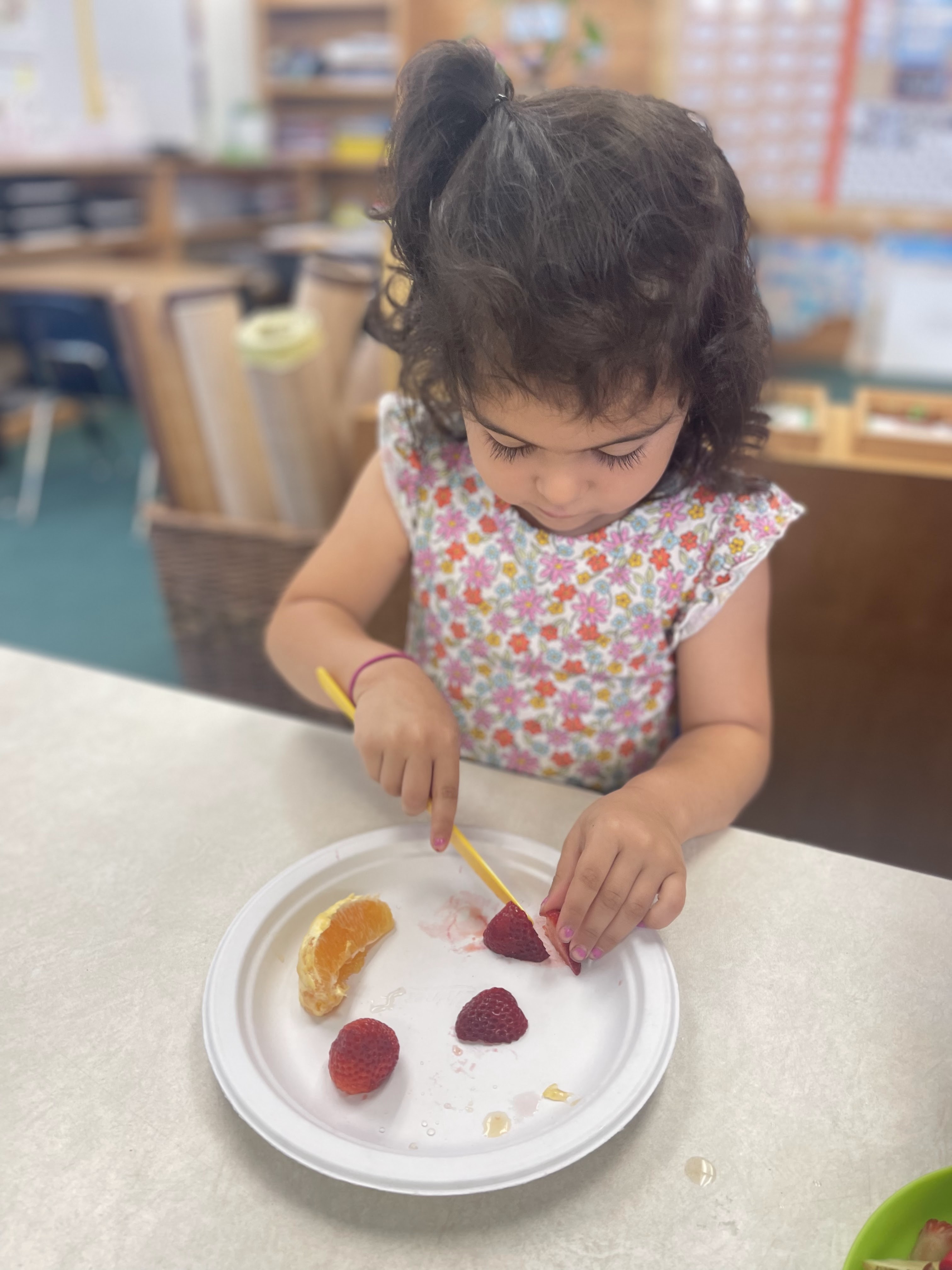
Follow Their Curiosities: If your child reaches for the broom, show them how to use a child-sized dustpan. If they show interest in food preparation, invite them to wash vegetables, peel bananas, or slice soft fruit with a child-safe knife.
Prioritize the Process Over Perfection: A primary child will take significantly longer to sweep up a spill or fold a napkin than an adult. Frame these moments as learning opportunities rather than chores.
Embrace Mistakes Gracefully: Spills, misaligned buttons, and dropped items are natural parts of the learning curve. Normalizing mistakes teaches resilience and prevents fear of failure.
Frame Tasks as Community Contributions: Viewing household responsibilities as shared contributions reinforces that every family member is an essential part of the team.
The Art of Stepping Back
Guiding a child toward independence requires intentional effort, slowing down our daily pace, and trusting in their innate capacity to learn. In a fast-paced world, stepping back to let a child try, fail, adjust, and succeed on their own is one of the greatest gifts we can offer them.
When we nurture independence from infancy through the primary years, we give children the foundation to navigate future academic and life challenges with curiosity, resilience, and joy.