Anyone who has watched a two-year-old learn a language they were never formally taught has seen it: young children absorb the world with a power adults simply do not have. Understanding how children under six learn changes how we teach them — and how you can support them at home.
The absorbent mind
Dr. Maria Montessori described the mind of a child from birth to about age six as an absorbent mind. Children this age do not learn the way older students do, through effort and study. They take in everything around them — language, movement, order, social manners, the whole texture of their culture — effortlessly, the way a sponge takes in water. What surrounds them literally becomes part of who they are.
Sensitive periods
Within those years, children pass through sensitive periods: windows when they are powerfully drawn to a particular kind of learning. There is a sensitive period for language, for order, for small objects and fine motor work, for movement and coordination. During each one, a child will practice the same thing over and over with astonishing focus — and learn it with an ease they will never have again.
Why the first six years matter so much
Because so much is being formed — not just facts, but concentration, independence, and the child's basic sense of themselves as a capable person — the early years are not a warm-up for "real" school. They are the foundation everything else is built on. This is exactly why a thoughtfully prepared environment matters so much at this age.
What this means for you
- Trust the repetition. When your child does the same puzzle for the tenth time, they are not stuck — they are building mastery. Let them.
- Offer order. Predictable routines and a tidy, reachable space help a young child feel secure and free to explore.
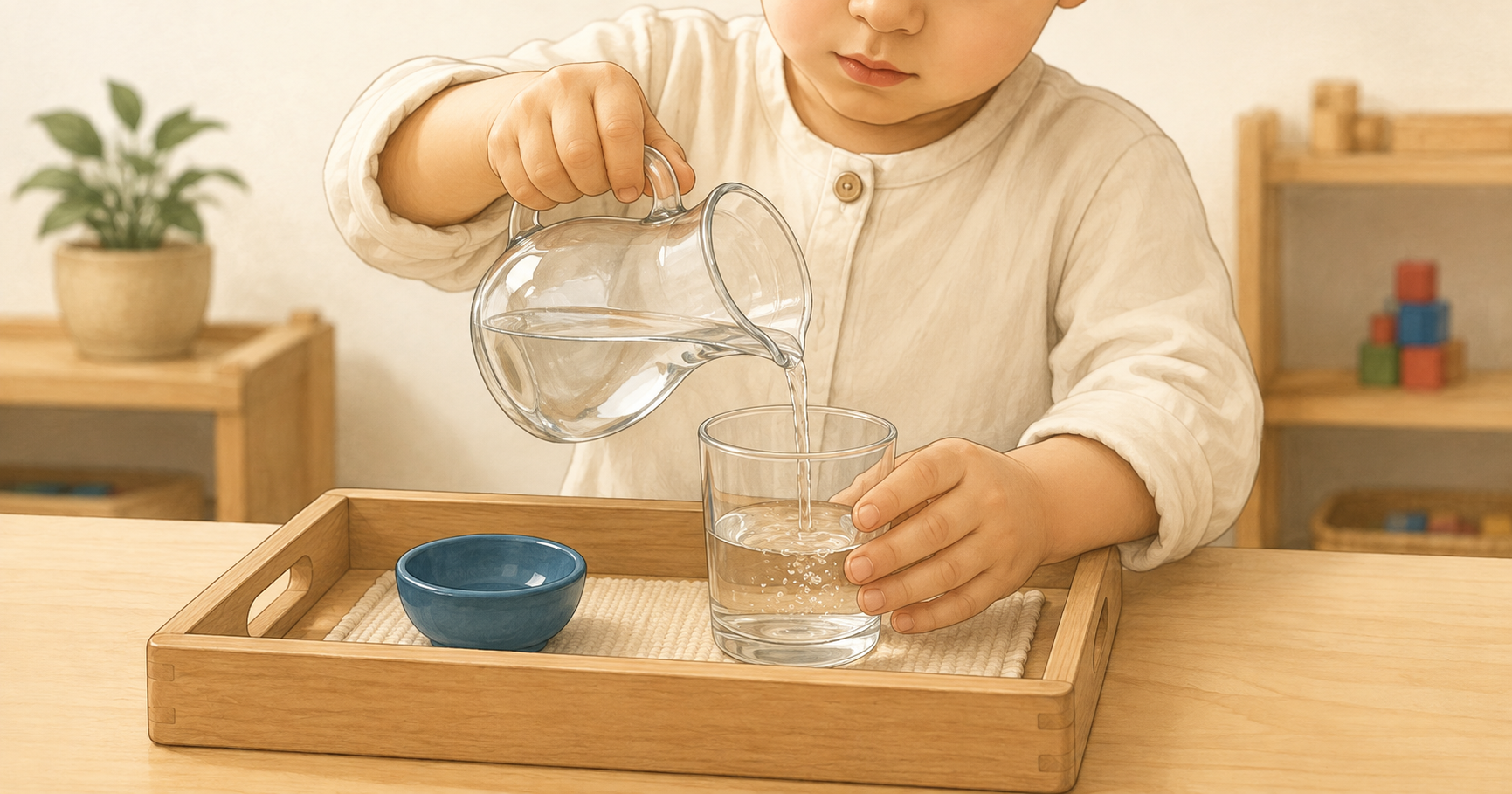
- Give real experiences. Pouring, sweeping, carrying, sorting — ordinary life is rich learning for a child in these years.
Our infant, toddler, and preschool programs are each built around what children are actually doing developmentally at that stage. Come see it in action.